
Keep Your Providers Credentialed, Enrolled , and Ready to Bill

Medical credentialing is the process of verifying a healthcare provider’s qualifications and establishing their eligibility to participate with insurance payers. Accurate credentialing is essential for providers who need to enroll with Medicare, Medicaid, and commercial insurance plans and receive reimbursement for covered services.

Healthcare Revenues provides medical credentialing services for physicians, individual providers, group practices, specialty practices, clinics, hospitals, and healthcare organizations across the United States.

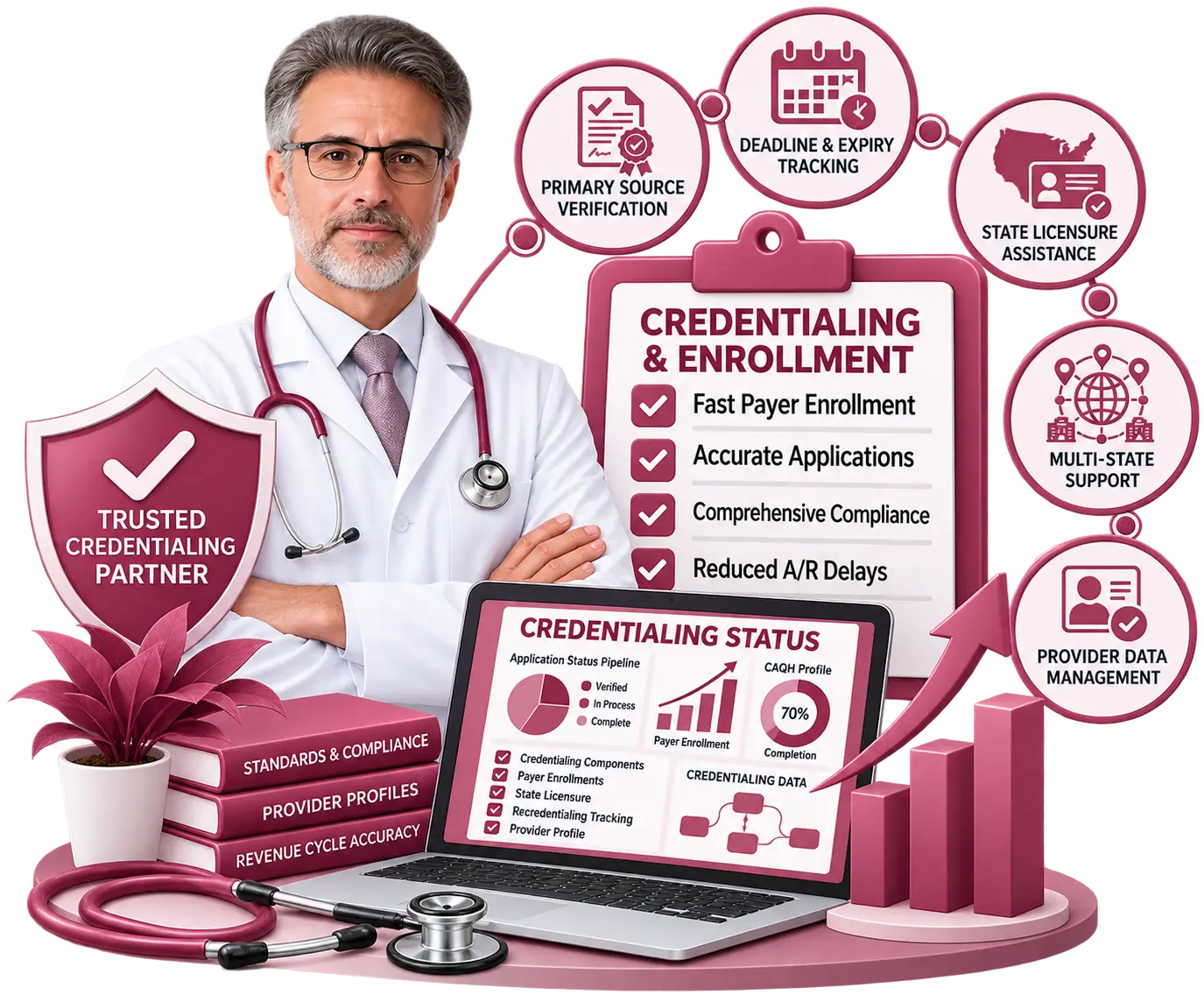
Our credentialing services cover provider enrollment, payer applications, CAQH profile management, primary source verification, recredentialing, revalidation, provider information updates, and credentialing status tracking.

What Is Medical Credentialing?

Medical credentialing is the process of reviewing and verifying a healthcare provider’s professional qualifications before the provider participates with a healthcare organization or insurance payer.

Credentialing may involve verification of information such as:

Once the required information has been collected and verified, credentialing documentation is submitted to the appropriate payer or organization according to its requirements.

Credentialing is closely connected to provider enrollment. Credentialing focuses on verifying a provider’s qualifications, while enrollment establishes the provider’s participation with a specific health plan or payer.

Why Medical Credentialing Matters

A provider may be fully qualified to practice medicine but still face billing and reimbursement issues if the required payer enrollment and credentialing processes are incomplete.
Credentialing and enrollment affect whether a provider is properly established with a payer and whether claims can be processed under the provider’s participation status.

Common credentialing-related issues include:

Keeping credentialing information accurate and current helps reduce administrative problems that may affect provider enrollment, billing, and reimbursement.

Our Medical Credentialing Services

Healthcare Revenues provides credentialing and provider enrollment support across the provider lifecycle.

1

Initial Provider Credentialing

Support for new providers entering a practice or healthcare organization, including collection, organization, verification, and submission of required credentialing information.

2

Payer Enrollment

Enrollment support for providers seeking participation with Medicare, Medicaid, and commercial insurance payers.

3

CAQH Profile Management

Support with CAQH profile information, documentation, updates, and maintenance required for participating payers.

4

Primary Source Verification

Verification of provider credentials through appropriate primary sources as required by the payer or credentialing organization.

5

Medicare Provider Enrollment

Support with Medicare enrollment requirements and provider information submitted through the applicable enrollment process.

6

Medicaid Provider Enrollment

Support for Medicaid provider enrollment based on applicable state requirements and payer processes.

7

Commercial Payer Enrollment

Credentialing and enrollment support for commercial insurance plans and health insurance networks.

8

Recredentialing

Ongoing credentialing support when providers reach payer-specific recredentialing periods or require updated verification.

9

Provider Revalidation

Support for payer revalidation requirements, including review of provider information and required documentation.

10

Provider Information Updates

Management of changes involving provider addresses, specialties, licenses, affiliations, contact information, and other credentialing data.

11

Credentialing Status Tracking

Tracking applications, payer responses, pending requirements, effective dates, renewals, and other credentialing milestones.

12

Credentialing Issue Resolution

Support in identifying missing information, application issues, documentation problems, and other credentialing-related obstacles.

Medicare, Medicaid, and Commercial Payer Enrollment

Healthcare providers may participate with multiple payers, and each payer may have different enrollment requirements, forms, documentation, timelines, and processes.

Healthcare Revenues supports provider enrollment across different payer categories, including:

Medicare

Support for applicable Medicare provider enrollment and related information requirements.

Medicaid

Support based on the applicable state Medicaid program and its provider enrollment requirements.

Commercial Payers

Support for enrollment with commercial insurance companies and health plans based on their specific credentialing and participation requirements.

Because payer requirements differ, credentialing information must be kept accurate and consistent across applications and provider profiles.

CAQH Credentialing Support

HEDIS Support for Healthcare Organizations

CAQH is an important part of the credentialing process for many healthcare providers and commercial payers.

A provider’s CAQH profile may contain information such as:

  • Professional credentials
  • Education and training
  • Work history
  • Licensure
  • Malpractice insurance
  • Practice information
  • Hospital affiliations
  • Other professional information

Incomplete, outdated, or inconsistent information may create additional work during the credentialing and enrollment process.

Healthcare Revenues provides CAQH support to help maintain provider information and required documentation according to applicable payer requirements.


Our Medical Credentialing Process

Provider Information Collection

We begin by collecting the provider information and documentation required for the credentialing or enrollment process.

Information Review

The submitted information is reviewed for completeness, consistency, and applicable credentialing requirements.

Credential Verification

Required credentials are verified through appropriate sources based on payer or organizational requirements.

Application Preparation

Credentialing and payer enrollment applications are prepared using the required provider information and supporting documentation.

Application Submission

Applications and required documents are submitted through the appropriate payer or enrollment process.

Status Follow-Up

Pending applications are tracked and followed up based on the applicable payer process.

Approval and Effective Date

Once the payer completes its process, participation status and applicable effective dates are documented.

Ongoing Credentialing Management

Credentialing information, renewals, recredentialing, revalidation, and provider updates require ongoing attention after initial enrollment.

Common Medical Credentialing Challenges

Healthcare organizations frequently deal with credentialing issues such as:

  • Delayed payer enrollment
  • Incomplete applications
  • Missing documents
  • Expired credentials
  • CAQH information that is not current
  • Conflicting provider information
  • Payer-specific documentation requirements
  • Recredentialing deadlines
  • Revalidation requirements
  • Provider demographic changes
  • Unclear application status
  • Multiple payer enrollment requirements
  • New provider onboarding
  • Difficulty tracking credentialing deadlines

A structured credentialing process helps organizations keep provider information organized and address requirements throughout the provider lifecycle.

Medical Credentialing for New Providers

Adding a new physician or healthcare provider involves more than adding the provider to a practice’s internal system.

Depending on the provider and payer requirements, the process may involve:

New Provider → Credentials → CAQH → Payer Applications → Verification → Enrollment → Effective Date → Billing

Starting credentialing early is important because payer processing times vary.

Effective onboarding also helps prevent delays caused by incomplete applications, missing documentation, outdated provider information, or payer-specific enrollment requirements. By coordinating these steps before billing begins, practices can help establish a smoother transition from provider onboarding to active payer participation and claim submission.

Clear tracking of each credentialing step helps practices identify outstanding requirements early and keep the provider enrollment process moving toward the effective date.

Recredentialing and Provider Revalidation

Credentialing does not end after the initial enrollment.

Payers may require providers to complete recredentialing or revalidation periodically. Providers may also need to update information when circumstances change.

Examples include:

  • License renewal
  • Board certification updates
  • Malpractice policy renewal
  • Address changes
  • New practice locations
  • Specialty changes
  • Hospital affiliation changes
  • Ownership or organizational changes
  • Payer revalidation requests

Healthcare Revenues provides ongoing support for credentialing updates, recredentialing, revalidation, and related provider information requirements.

How Credentialing Supports Your Revenue Cycle

Medical credentialing and revenue cycle management are closely connected.

A provider needs the appropriate payer participation and enrollment information before billing certain insurance plans under that provider’s participation status.

A simplified relationship is:

Credentialing → Payer Enrollment → Provider Participation → Effective Date → Billing → Claims → Payment → A/R

This makes credentialing an important administrative function within the broader healthcare revenue cycle.

Healthcare Revenues also provides:

  • Revenue Cycle Management
  • Medical Billing Services
  • Medical Coding Services
  • Eligibility & Benefits Verification
  • Charge Entry & Claim Filing
  • Accounts Receivable Management

Who We Serve

Healthcare Revenues provides medical credentialing and provider enrollment support for:

  • Individual Physicians
  • Medical Practices
  • Group Practices
  • Specialty Practices
  • Clinics and Medical Centers
  • Hospitals
  • Healthcare Systems
  • Multi-Location Healthcare Organizations
  • Organizations with Internal Billing Teams
  • Organizations Working With External RCM Providers

Credentialing requirements vary by provider, specialty, state, payer, and organization. Our services are structured around the applicable requirements for each credentialing process.
Why Healthcare Revenues?

Healthcare Revenues brings approximately 15 years of healthcare industry experience to its work with healthcare organizations.

Our approach is results-oriented. We focus on the work that needs to be completed, provide clear communication throughout the process, and deliver the services we commit to providing.

Credentialing is also closely connected to billing, payer participation, and revenue cycle performance. Our broader healthcare service portfolio allows credentialing requirements to be considered within the larger operational and financial picture of a healthcare organization.

Frequently Asked Questions About HEDIS Consulting

What is medical credentialing?
Medical credentialing is the process of verifying a healthcare provider’s professional qualifications and establishing eligibility to participate with healthcare organizations or insurance payers.
Credentialing focuses on verifying a provider’s qualifications and credentials. Payer enrollment establishes the provider’s participation with a specific insurance payer.
CAQH is a centralized provider information platform used by many healthcare organizations and commercial payers to collect and maintain provider credentialing information.
Healthcare Revenues provides support for applicable Medicare provider enrollment and credentialing requirements.
Yes. Healthcare Revenues provides Medicaid provider enrollment support based on applicable state requirements and payer processes.
Yes. Healthcare Revenues provides commercial payer enrollment and credentialing support for healthcare providers and organizations.
Credentialing and payer enrollment timelines vary based on the provider, payer, state, specialty, application requirements, and payer processing times.
Yes. Providers may need periodic recredentialing, revalidation, and updates to maintain accurate participation information with applicable payers.
Yes. Payer enrollment and provider participation information may affect whether claims are properly processed and reimbursed under applicable payer arrangements.
Yes. Healthcare Revenues supports credentialing and enrollment requirements for providers across different medical specialties.

Need Medical Credentialing Support?

Keep your provider credentialing, payer enrollment, and ongoing credentialing requirements organized with Healthcare Revenues.

Whether you are onboarding a new provider, enrolling with additional payers, managing CAQH information, or addressing recredentialing requirements, our team will help manage the applicable credentialing process.

Let's Build a Stronger Financial Future for Your Practice